Best Dog Car Seats for Small Dogs in a Dog-and-Baby Back Seat
Reader-supported — if you buy through our links we may earn a commission, at no extra cost to you. As an Amazon Associate I earn from qualifying purchases. Details
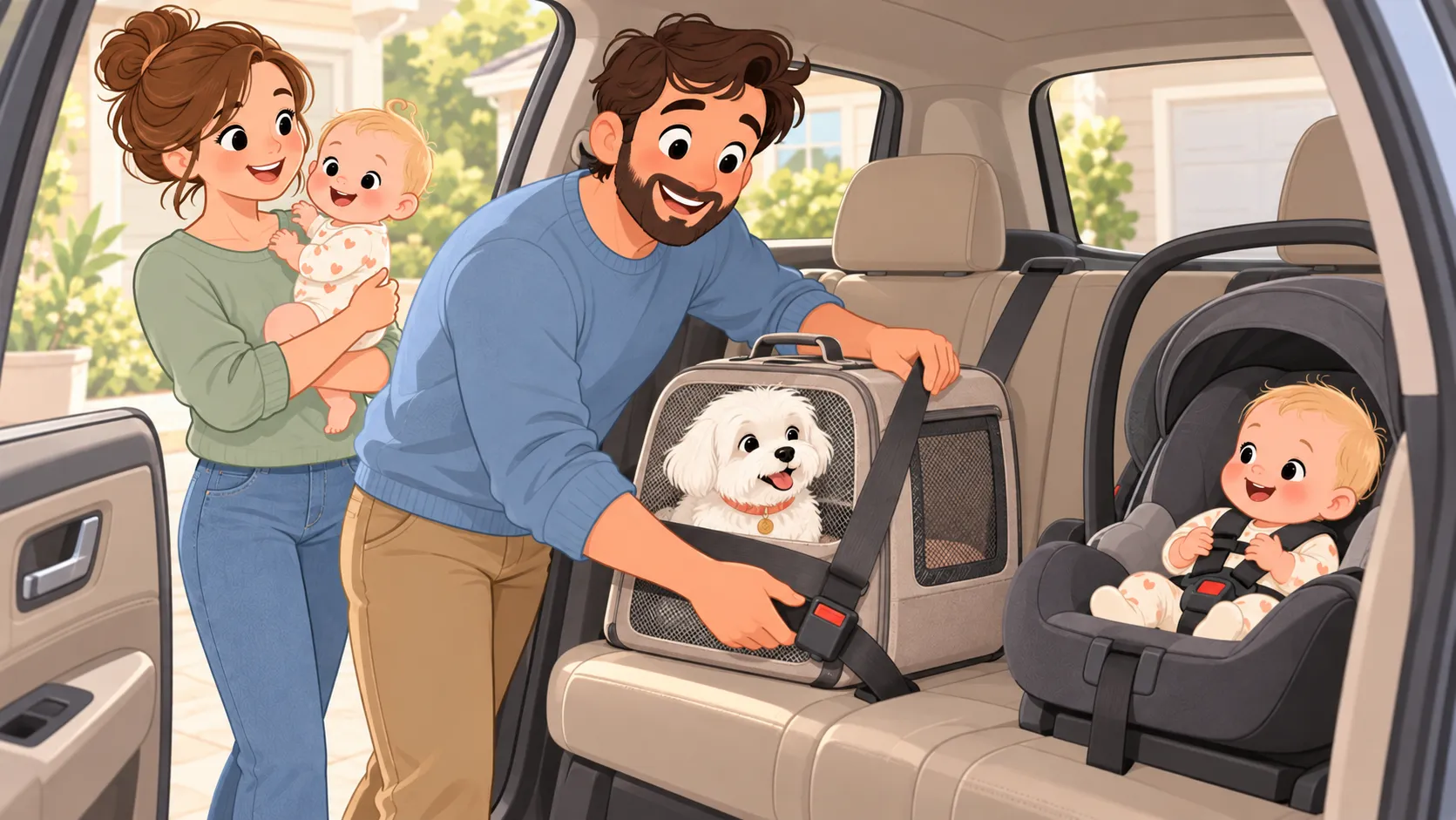
The short answer: for a small dog sharing the rear bench with a baby, skip the open plush booster and start with a closed, independently crash-tested carrier. The Diggs Passenger is our best overall pick for dogs that fit its one-size carrier and 18-pound tested limit. The Sleepypod Mobile Pet Bed is the best bed-style option for pets up to 15 pounds, provided its round 17-inch footprint fits without touching the infant seat.
We haven’t crash-tested these products. This guide relies on Center for Pet Safety certification records, manufacturer manuals and dimensions, exact US listings, and published installation information. A certification applies only to the named model, tested configuration, and weight range.
Why we are not recommending a plush booster bed
Amazon’s “dog car seat” results are full of elevated fabric beds with short tethers. They can raise a dog for a better view and may reduce wandering, but those benefits are not the same as crash protection. A tether clipped to a collar can load the neck. A thin strap or soft wall can fail. An unrestrained carrier can become a projectile toward the infant seat.
The Center for Pet Safety is an independent nonprofit that publishes certified carriers, harnesses, and crates. For this guide, a product needed current CPS evidence for the exact model. That left us with true restraint systems rather than the most visually comfortable booster beds.
Our two picks at a glance
| Diggs Passenger | Sleepypod Mobile Pet Bed | |
|---|---|---|
| CPS result | 5 stars | 5 stars |
| Certified/test weight | 18-lb test dog | Pets up to 15 lb |
| Shape | Structured rectangular soft carrier | Round foam-walled bed/carrier |
| Approximate exterior | 20 x 11.5 x 10.8 in | 17 x 17 x 13.5 in |
| Car connection | Manufacturer belt clips and buckle strap | Seatbelt straps plus PPRS Handilock system |
| Everyday role | Travel carrier with pockets and pad access | Everyday bed plus carrier |
| Best for | Narrower back-seat footprint and mixed air/car travel | A dog that already relaxes in a bed-style pod |
Dimensions are planning numbers, not proof of fit. Door shape, seat contour, belt geometry, infant-seat width, and front-seat position all change the usable space. Measure the dog and the vehicle before choosing a color or accessory.
Best overall: Diggs Passenger
The Diggs Passenger earned a five-star CPS result in a test using an 18-pound dog simulant. Its rectangular form is useful when the same rear bench must also hold a rear-facing infant seat: the footprint is about 11.5 inches front to back and 20 inches long, so it can fit differently from a round pod.
The carrier uses custom seatbelt clips and a buckle strap rather than simply resting on the seat. It also has a side-panel access system for changing a pad without fully opening the main compartment. That is practical on a trip, but convenience features never replace closing every opening before driving.
Choose Passenger when the dog fits comfortably below the stated limit, the carrier can lie flat on its assigned rear position, and the belt path works without crossing the infant seat. Skip it when the dog is near the limit but cannot stand, turn, and settle as the manual requires, or when the carrier presses against the child restraint.
The Navy Amazon listing is ASIN B09Y8354NB. Confirm the product-details field identifies the Passenger model; similarly named Diggs crates and carrier accessories are not substitutes for its certification.
Best bed-style carrier: Sleepypod Mobile Pet Bed
The Sleepypod Mobile Pet Bed turns a round everyday bed into a closed carrier by attaching its mesh dome. Center for Pet Safety’s carrier study named the Mobile Pet Bed with PPRS Handilock a top performer, and Sleepypod currently states a five-star rating for pets up to 15 pounds.
Its advantage is acclimation. A small dog can sleep in the lower bed at home, so the travel enclosure begins as familiar space rather than a bag that appears only before a vet visit. The interior bedding is removable and machine-washable.
The tradeoff is width. A roughly 17-inch round base can consume more lateral bench space than expected, particularly beside a broad infant seat. It must not lean on the child restraint, cover a buckle, or alter the child seat’s required clearance. The exact Charcoal Grey listing here is ASIN B08JQPL9HS.
The shared-back-seat checklist
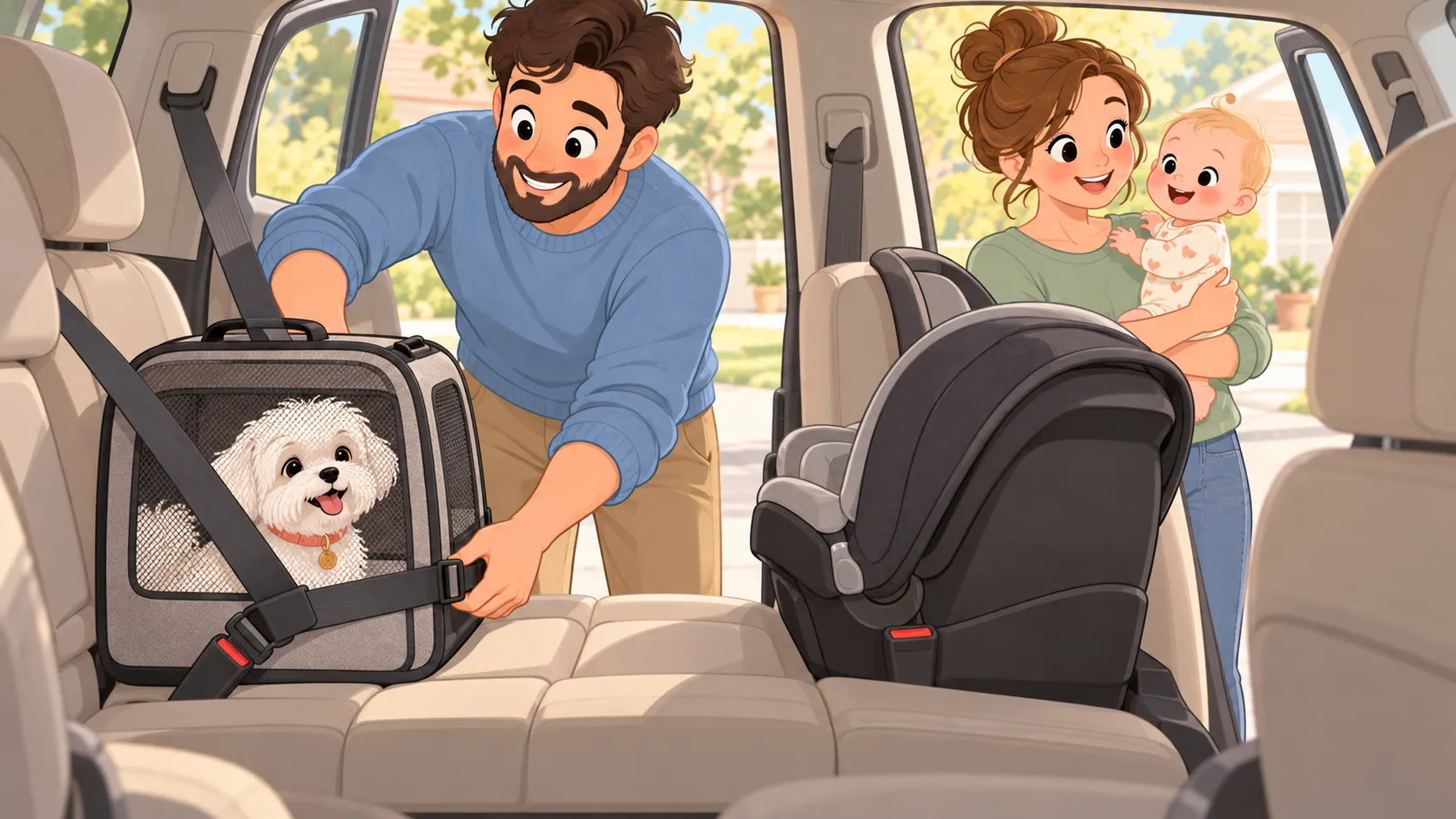
Start with the baby seat. Install it according to both the child-restraint manual and the vehicle manual. Do not borrow its lower anchors, top tether, seatbelt, buckle, or required side space for the dog product. If the infant installation changes when the dog carrier is added, the arrangement fails.
Then check the dog position:
- Place the empty carrier on the opposite outboard position or another position explicitly permitted by both manuals.
- Route the vehicle belt and every carrier component exactly as instructed.
- Confirm the carrier sits flat and cannot crowd the infant seat.
- Close the carrier completely and remove loose leashes, bowls, or toys that could fly in a sudden stop.
- Check that the driver can see and reach controls without the carrier shifting.
- Load the dog only after practicing calm entry at home.
Do not improvise by wrapping an extra cargo strap around a soft carrier, clipping an interior tether to a collar, or attaching the dog product to the baby’s LATCH anchors. More straps are not automatically safer; an untested routing can concentrate forces or interfere with release after a crash.
Measure the dog before the car
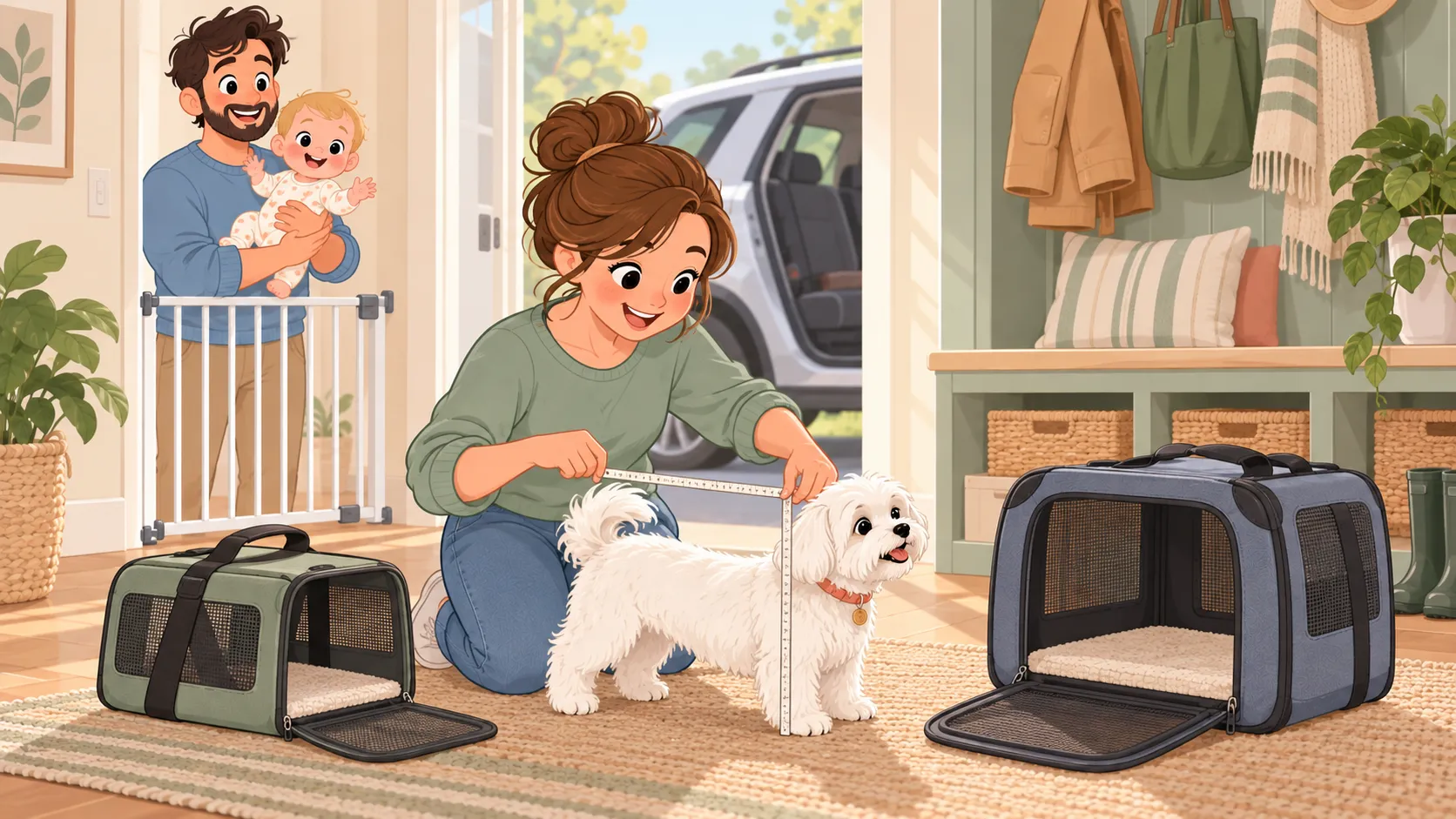
Weight limits are only the first filter. Measure standing height, body length, and the dog’s ability to turn and lie normally. A Maltese with long legs can need more interior height than a heavier compact dog. Hair volume is not body size, but compressed coat and ears still should not be forced against the enclosure.
Set each candidate carrier’s footprint on the rear bench with painter’s tape or a folded towel before purchase. Close the door, move the front seat through its normal range, and verify the infant seat stays untouched. If the vehicle has a raised center hump, recessed buckle, or sharply contoured cushion, the apparent width may not be usable width.
Acclimation is part of the safety system
A certified carrier cannot help if the dog panics, chews mesh, or is zipped in only at departure time. Leave the carrier open at home with the door secured so it cannot swing. Reward voluntary investigation. Feed small portions nearby, then inside, before briefly closing it. Add very short parked-car sessions, then quiet drives.
Stop if the dog pants heavily, claws, salivates, or cannot settle. Motion sickness and travel anxiety deserve veterinary guidance, not a tighter tether. Inspect mesh, seams, zippers, belt clips, and structural panels before every trip. Replace or professionally evaluate a restraint after a collision according to the manufacturer; invisible damage matters.
What about dogs above the carrier limits?
Sleepypod advises that dogs below roughly 17–18 pounds generally use a carrier because of more fragile bone structure. For dogs 18 pounds and up, a properly fitted CPS-certified harness may be the practical alternative when a carrier cannot fit beside the infant seat. Our crash-tested dog car harness guide explains the Clickit Sport and its seatbelt installation.
The harness must still have its own seating position and must not overlap the baby. Never choose an undersized carrier merely because the dog is “small,” and never use a harness outside the maker’s published fit and weight guidance.
Final recommendation
Choose the Diggs Passenger for a small dog up to the tested 18-pound configuration when a rectangular carrier makes better use of the bench. Choose the Sleepypod Mobile Pet Bed for a pet up to 15 pounds that benefits from a familiar bed-to-carrier routine and whose car has room for the round base.
Skip both if either touches the infant seat, cannot be installed exactly as directed, or does not fit the dog. In that case, change the seating plan, use a different CPS-certified restraint, or separate the trip. Comfort matters, but independent crash evidence and correct installation decide the purchase.
Sources
- Center for Pet Safety certified products
- Diggs Passenger CPS certification
- Sleepypod Mobile Pet Bed official specifications
- Center for Pet Safety 2015 carrier study summary
- Amazon US listings for ASINs B09Y8354NB and B08JQPL9HS
Certifications, specifications, variants, and destinations last checked September 20, 2026. This guide does not replace either product manual, the vehicle manual, the child-restraint manual, or professional installation advice.
Our picks at a glance
Diggs Passenger Travel Carrier, Navy
What stands out
- Center for Pet Safety 5-star certified with an 18-pound test dog
- Built-in car-seat belt clips and buckle strap
- Structured rectangular shape uses back-seat width efficiently
Things to know
- One size and an 18-pound tested limit exclude many dogs
- Measure the dog and rear-seat space before ordering
Sleepypod Mobile Pet Bed, Charcoal Grey
What stands out
- Center for Pet Safety 5-star certified for pets up to 15 pounds
- Converts from an everyday bed to a closed carrier and car restraint
- Removable machine-washable interior bedding
Things to know
- Round 17-inch footprint can take substantial bench width
- Premium price and a firm 15-pound certified limit
Questions families actually ask
Are soft dog booster seats crash tested?
Many plush booster beds are made for comfort or distraction reduction, not independently verified crash protection. Look for the current Center for Pet Safety certification for the exact model and size rather than relying on “car seat” or “safety tether” wording.
Can a small dog carrier sit beside an infant car seat?
It can only if both products install exactly as their manuals require, neither overlaps or presses on the other, and every vehicle belt or anchor remains dedicated to the correct restraint. A certified child-passenger safety technician can check the infant-seat installation.
Is it safe to clip a dog car-seat tether to a collar?
No. A collar concentrates force on the neck and is not a crash restraint. Use only the attachment and installation method specified by the tested carrier or crash-certified harness.
What should I buy for a dog over 18 pounds?
These two carriers are not the right fit. For dogs 18 pounds and up, compare a properly fitted Center for Pet Safety-certified harness such as the Sleepypod Clickit line, or a certified crate that fits the vehicle.