Pet Camera vs. Baby Monitor: Why You Shouldn't Combine Them
Reader-supported — if you buy through our links we may earn a commission, at no extra cost to you. As an Amazon Associate I earn from qualifying purchases. Details
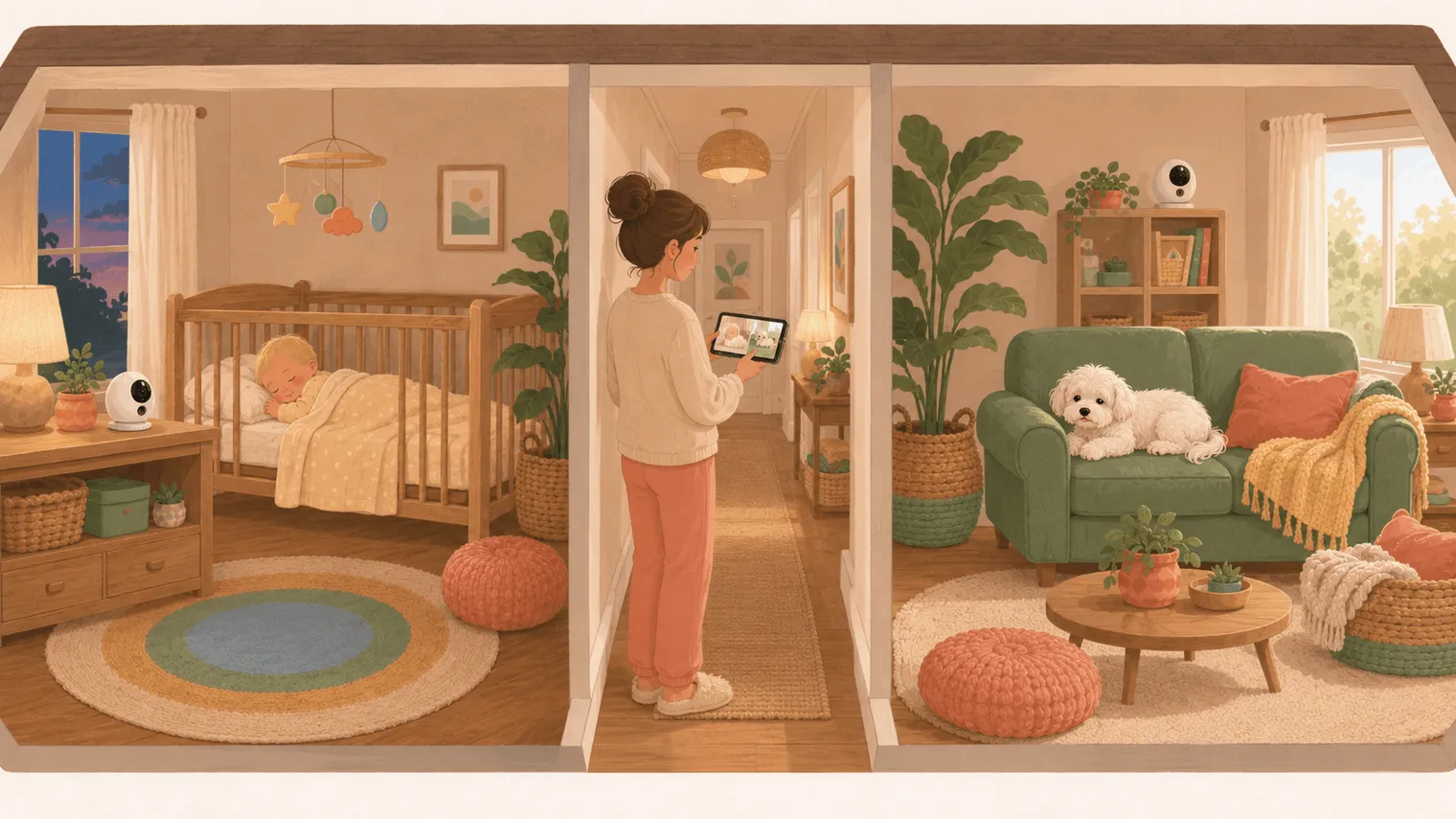
Somewhere in every expecting household with a dog, someone has the idea: the pet camera already works — point it at the crib and we’re done. It feels efficient. It’s one less gadget. And it’s one of those ideas that sounds better the less closely you look at it.
Full disclosure on this one: we sell nothing here and we haven’t lab-tested any of these cameras. This is reasoning built from product specs, the way these devices are documented to work, and the patterns across owner reviews — where owners and the spec sheets disagree, we say so.
Here’s why the dog camera and the baby monitor should stay two separate machines.
The two jobs are opposites
A pet camera is built for away — you’re at work, the dog is home, and the camera’s job is to bridge distance: cloud video you can open from anywhere, alerts about barking, maybe a treat cannon. Its entire architecture assumes the watcher is far away and the internet is part of the loop.
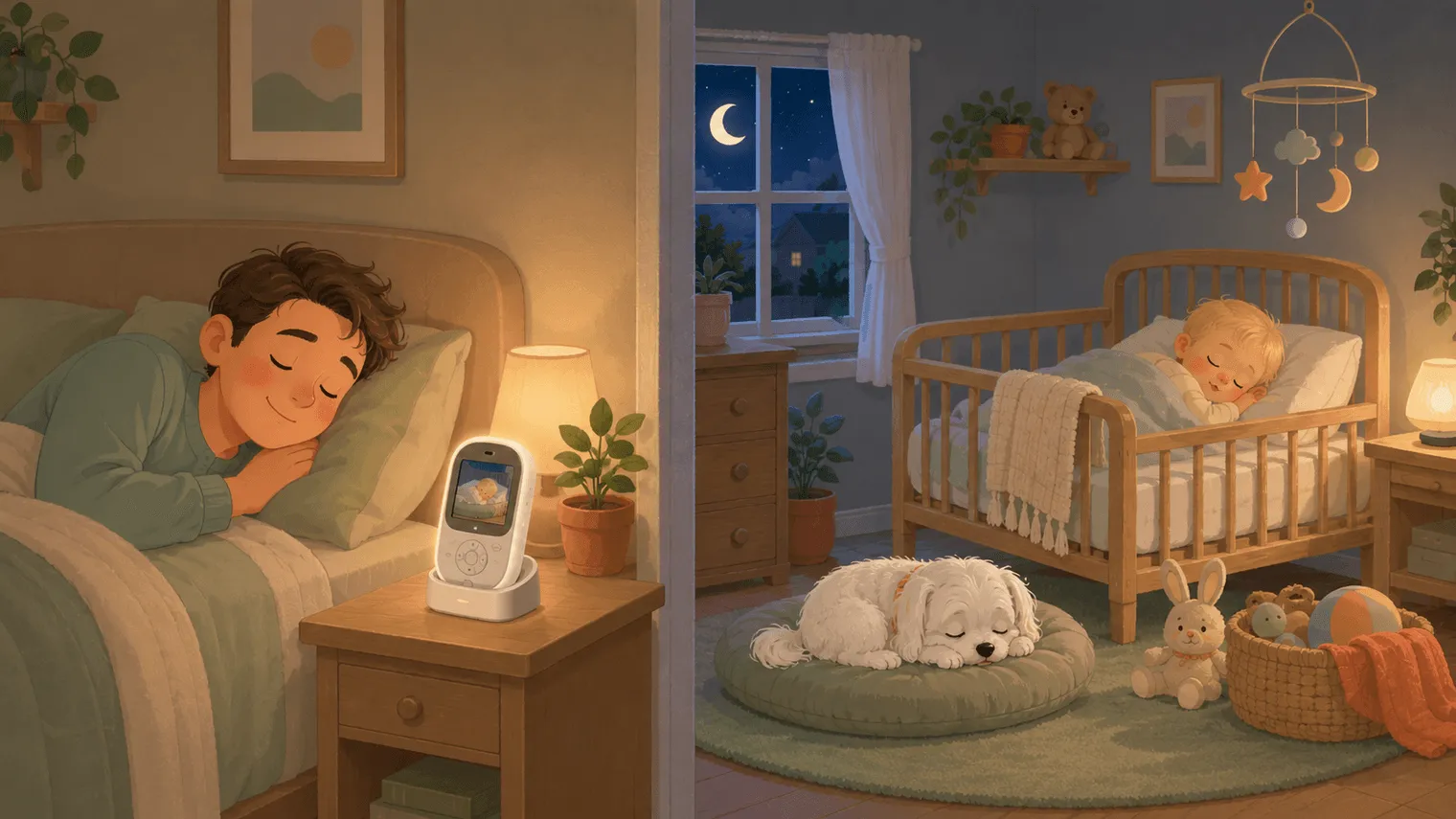
A baby monitor is built for near — you’re in the next room, and the job is a continuous, reliable, instant feed of one sleeping human. Many popular baby monitors still use dedicated local radio links with their own handheld screens, a design that leans on near-and-reliable rather than clever-and-connected when the subject is your baby. No app login, no server outage, no buffering at 3 a.m.
One machine optimized for distance, one for proximity. Pointing the distance machine at the crib doesn’t merge the jobs; it just does the second job badly.
The privacy line
Cloud cameras have had genuinely bad days. In one documented 2024 incident, a major budget-camera brand briefly showed about 13,000 users thumbnail images from other people’s cameras. For a camera pointed at a sofa and a sleeping mutt, that’s unsettling. For a camera pointed at a crib, it’s disqualifying.
This isn’t an argument that any specific brand is careless — it’s an argument about architecture. A nursery feed that never leaves the house can’t end up anywhere weird. That’s why our default recommendation for the crib is local-first equipment, and why the cloud cameras worth liking live in the living room, pointed at the dog.
The alert problem
Pet-camera intelligence is tuned for dogs: barking, motion, a person entering the frame. Baby monitoring cares about a different signal set — crying, and increasingly (in premium monitors) breathing movement and sleep patterns. Pointing a bark-detector at a newborn gets you alerts about the wrong species. You’ll hear when the dog barks outside the nursery door; the quiet fussing that precedes a full meltdown isn’t what it was trained to notice.
And the practical 3 a.m. detail nobody mentions: pet-camera apps are phone apps. A dedicated monitor’s handheld unit turns on instantly, stays on all night on a nightstand, and never hides behind a lock screen, a dead battery, or a notification pileup.
The honest budget math
A do-everything premium camera often lands in the same ballpark as a competent dedicated baby monitor plus a good pet camera. Split the budget: the nursery gets reliability and privacy, the dog gets treat-tossing and tracking, and neither job is compromised. In a house that already negotiates everything between species, this is the rare decision with no trade-off — separate is simply better.
Questions families actually ask
Can I technically use a pet camera as a baby monitor?
Technically, yes — it's a camera and babies are visible. But pet cameras aren't designed or tuned for infant monitoring, their alerts are generally set up for barking and motion rather than cries or sleep patterns, and most are cloud-connected by default. 'It can show me the crib' is a much lower bar than 'it's designed to watch a baby.'
What should I actually look for in a baby monitor?
For most families: a dedicated local-video monitor (the kind with its own handheld screen and no internet connection) covers the core job with zero cloud exposure. Add-ons like sleep analytics are nice-to-haves layered on top — the non-negotiable is a reliable, private video-and-audio link.
Is a Wi-Fi camera in the nursery ever okay?
Plenty of families use them and most never have an issue — but you're accepting cloud risk for convenience, and camera vendors have had real incidents, including a [February 2024 Wyze glitch](https://www.engadget.com/wyze-camera-security-issue-showed-13000-users-other-owners-homes-140059551.html) that briefly showed about 13,000 users thumbnail images from other people's cameras. If you go Wi-Fi in the nursery, use a reputable brand, unique passwords, two-factor login, and firmware updates.
So what setup do you recommend for a dog + baby home?
A dedicated local baby monitor for the nursery, and a pet camera where the dog actually spends the day. Two tools, two jobs, no compromise on either — and usually cheaper than one premium do-it-all camera.