Helping an Anxious Dog Adjust to a New Baby
Reader-supported — if you buy through our links we may earn a commission, at no extra cost to you. As an Amazon Associate I earn from qualifying purchases. Details
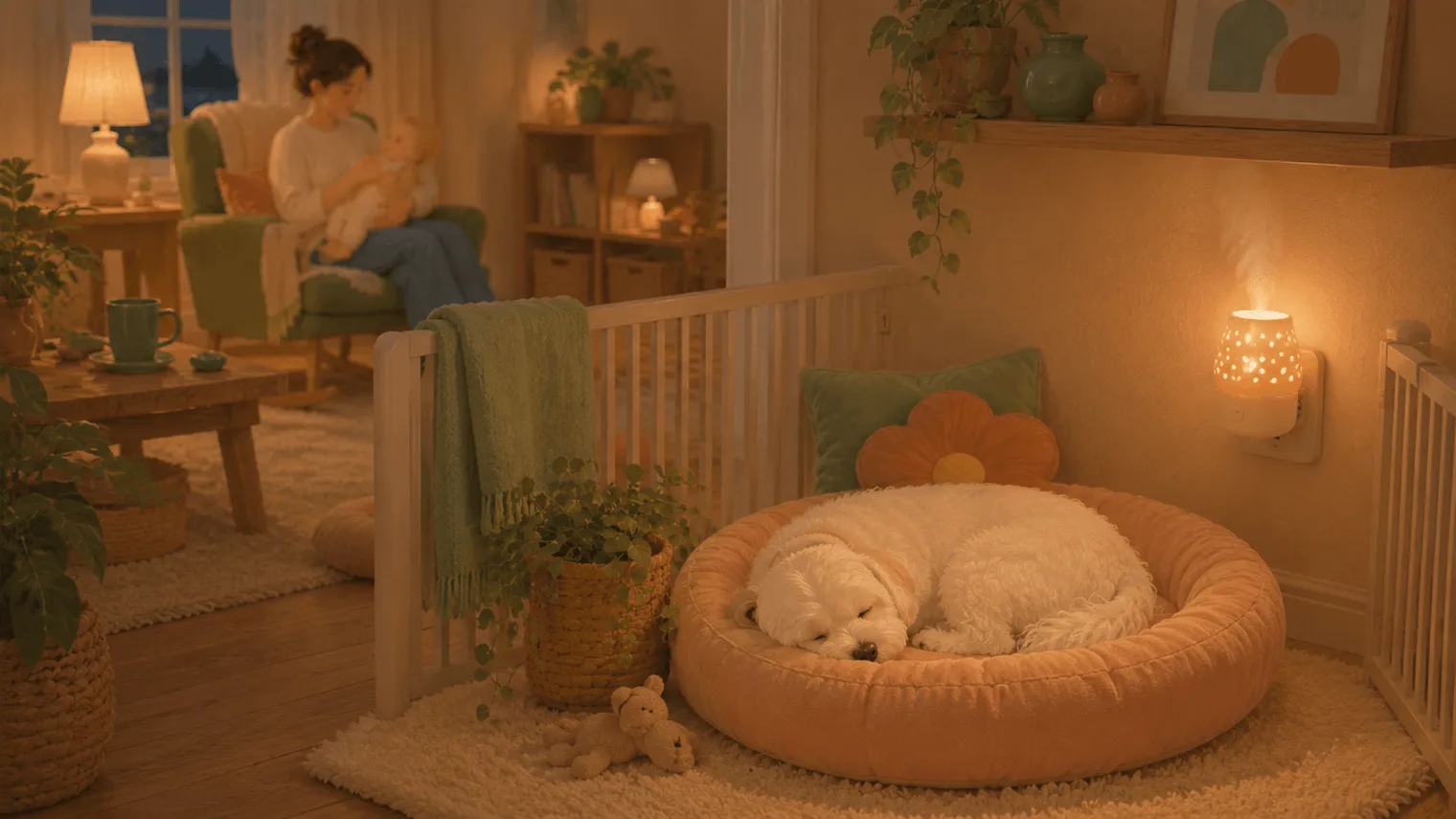
Some dogs greet a new baby with a shrug. This guide is for the other kind — the worriers, the velcro shadows, the ones who notice when you move a chair. An anxious dog isn’t a worse dog; it’s a dog that needs the changes explained more slowly and the safety signals turned up louder. Plan for that, and most anxious dogs land on their feet.
Safety note up front: anxiety and aggression are different problems. If your dog growls, freezes, or guards around the baby, that’s the body-language guide and a professional — not this article alone.
Layer 1: predictability is the medicine
Anxious dogs run on schedules the way toddlers do. The single highest value move costs nothing: anchor three fixed points — morning walk, dinner time, evening wind-down — and defend them through the newborn chaos. The day can be a hurricane between the anchors; the anchors tell the dog the world still works.
Everything that must change should have changed before the due date — but if the baby’s already home and the dog’s already wobbling, lock the three anchors first and rebuild from there.
Layer 2: a den with a door policy
Every anxious dog needs a retreat where the new noises can’t follow: a crate with the door open, or a gated room with the dog’s bed in the quietest corner you have. Two rules make it work:
- Nobody follows the dog in there. Not the vacuum, not visitors, and later, absolutely not the crawling baby. A retreat that can be invaded isn’t a retreat.
- Good things appear there unprompted. A frozen Kong delivered to the den during the baby’s loudest hours teaches “when chaos rises, my spot pays out.”
If your dog’s safe spot needs an upgrade, a proper crate setup or a calming bed is money well spent — but placement and policy matter more than the gear.
Layer 3: burn the fuel
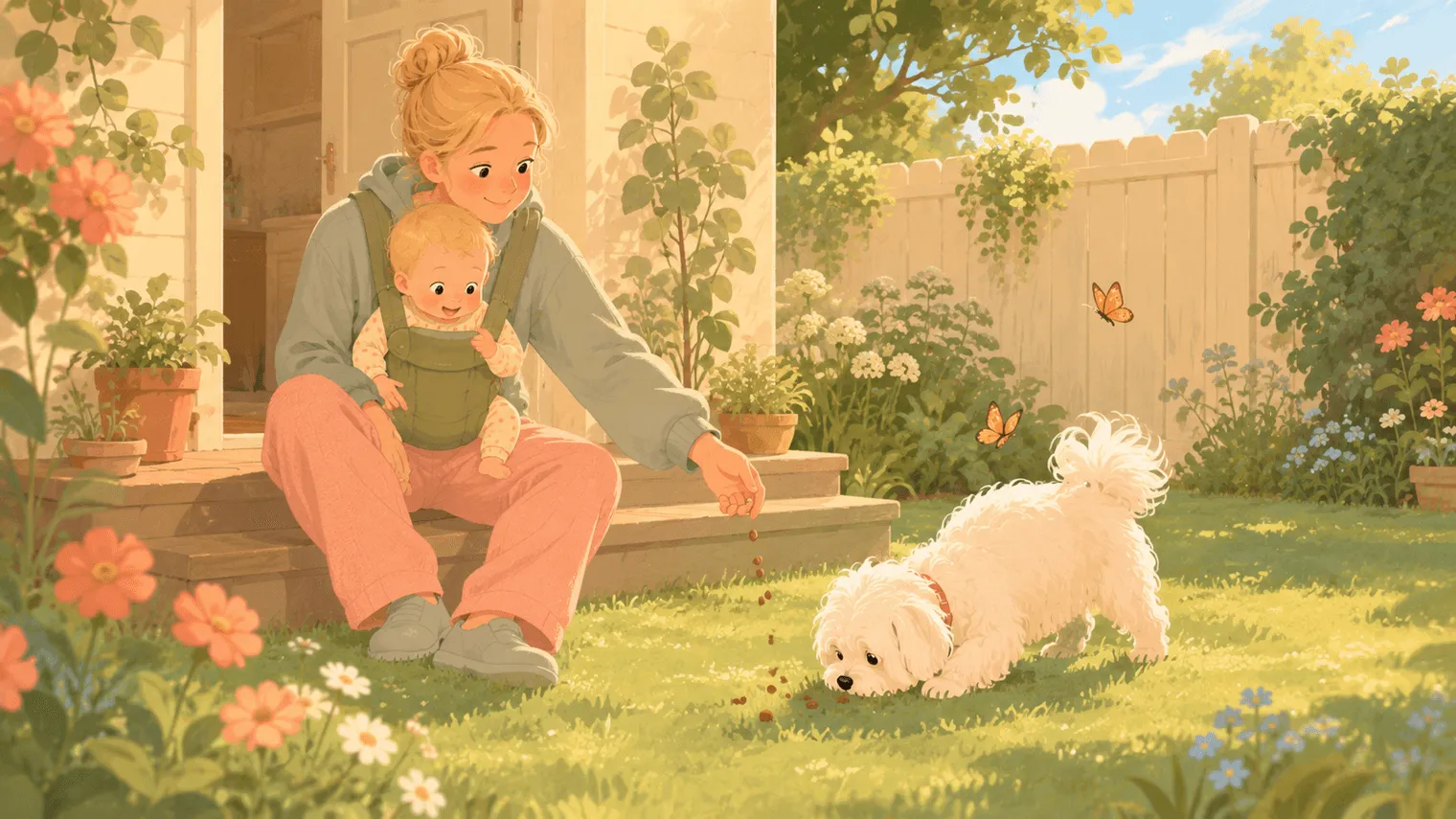
Anxiety and unspent energy are the same molecule wearing different hats. A worried dog with a full tank becomes a pacing dog; the same dog after a real walk and ten minutes of sniffing becomes a napping dog. When walks shrink in the newborn era, replace the mileage with brain work: scatter-feeding in the yard, puzzle feeders, licking projects, a frozen Kong rotation. The AKC notes that 20 to 30 minutes of sniffing can leave a dog as tired as an hour-long walk without it.
Layer 4: the optional extras, weighed honestly
- Pheromone diffusers (Adaptil-style): low risk and, per a veterinary review of the studies, mixed evidence that’s modest at best for adult dogs — worth trying for a month in the room where the dog sleeps. Our full guide covers what owners expect from it — and what not to.
- Pressure wraps and calming beds: help some dogs, placebo for others (the placebo is partly for the humans, which also has value).
- Calming chews and supplements: wildly variable quality; vet first, marketing second.
- White noise: underrated for noise-sensitive dogs — the same machine that masks barking for the baby can mask doorbells and street noise for the dog.
None of these replace Layers 1–3. All of them stack on top.
What the win looks like
Progress for an anxious dog isn’t a personality transplant — it’s a trend line. Week one: pacing during every cry. Week three: lifts head, sighs, stays on the mat. Week six: sleeps through a diaper-blowout-level crisis. Keep a rough log (thirty seconds at night); anxious-dog progress is invisible day to day and obvious week to week, and the log is also exactly what a behaviorist will want if you end up needing one. Slow is normal. Boring is winning.
Questions families actually ask
How do I know if my dog is anxious rather than just adjusting?
Adjustment looks like brief uncertainty that improves week over week. Anxiety looks like a flat or worsening line: pacing, panting indoors, appetite loss, shadowing you room to room, whining at the nursery door, or new destructive habits. If the trend isn't improving by week two or three, treat it as anxiety and add support layers.
Do calming diffusers and supplements actually work?
The honest answer: modestly, sometimes, and never alone. For pheromone diffusers like Adaptil, a [veterinary review of the studies](https://www.walkervillevet.com.au/blog/adaptil-dap-review/) describes the evidence as mixed and modest at best for adult dogs, while calling the product harmless to try; calming supplements vary wildly. They're the seasoning, not the meal — routine, exercise, and safe spaces do the heavy lifting. Talk to your vet before adding anything ingestible.
Should I crate my anxious dog more or less after the baby arrives?
If the crate is already the dog's happy place, lean on it — a den with a frozen Kong during chaotic windows is support, not exile. If the crate is new or disliked, a baby launch is the wrong moment to introduce it; use a gated room with the dog's bed instead.
When does an anxious dog need a vet or behaviorist?
Escalate if you see self-harm (licking raw spots), refusal to eat for more than a day, aggression of any kind, or panic-level reactions to the baby. A vet can rule out medical causes and discuss medication; a certified behaviorist (CAAB/DACVB) can build a desensitization plan. Neither is an admission of failure — they’re the fast path.